Avalokiteśvara (Guanyin): The Thousand-Armed Bodhisattva of Compassion
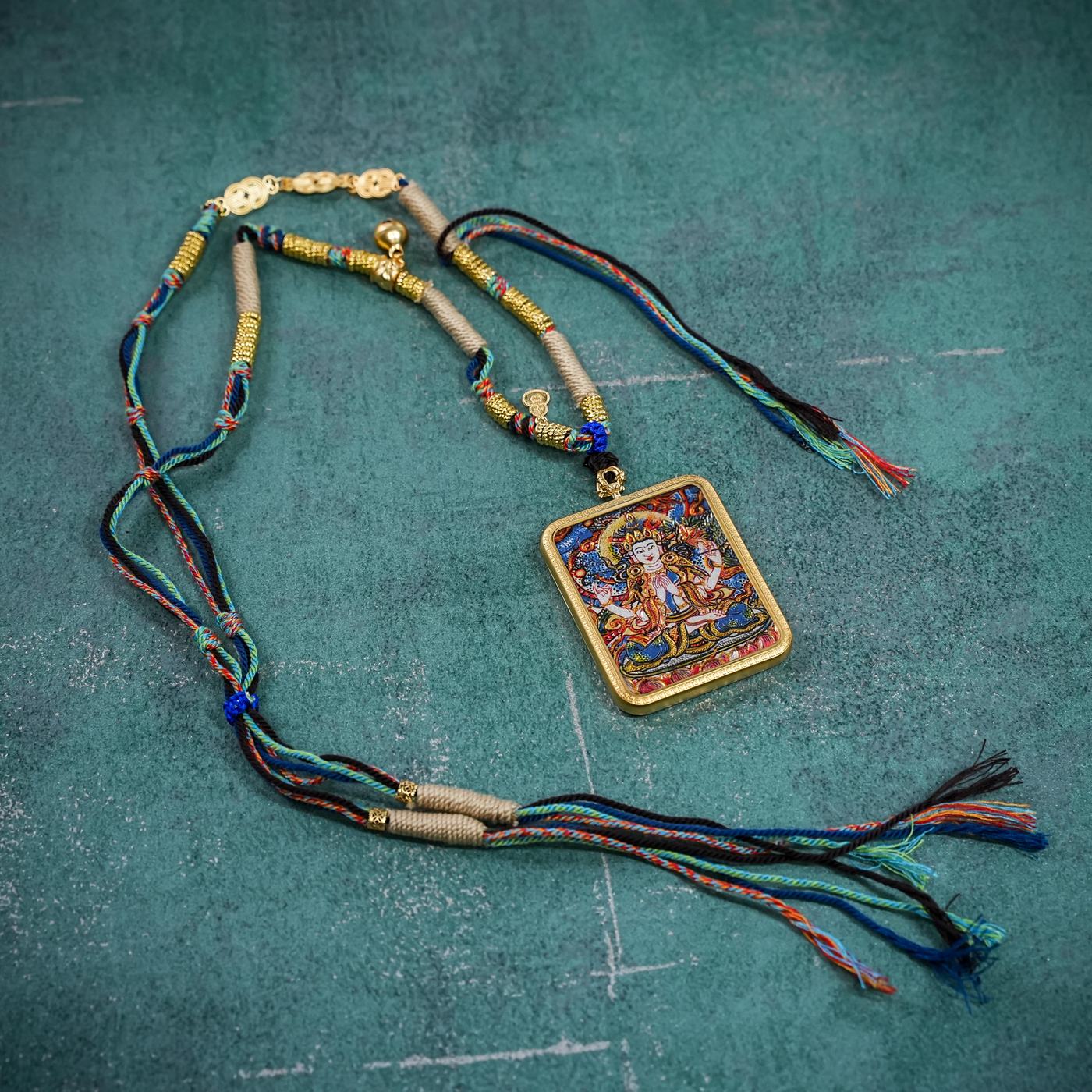
Few figures in Buddhist art are as instantly recognisable, or as widely loved across so many cultures, as the bodhisattva of compassion — known across Sanskrit, Tibetan, Chinese and Japanese tradition by different names, but always by the same defining quality: a compassion that notices everyone.
Who is Avalokiteśvara?
Avalokiteśvara's name is generally translated as "the lord who looks down [upon the world with compassion]." In the Eight Guardian Buddha tradition covered in our zodiac guardian guide, he is the guardian of the Rat year — fitting, since the Rat is traditionally seen as quick-witted and resourceful, qualities that pair well with a bodhisattva said to respond to a call for help the instant it is made, without needing to be asked twice.
He appears constantly throughout Mahayana Buddhist scripture, most famously in the Lotus Sutra — where an entire chapter, often called the "Universal Gate," is devoted to describing how he appears in whatever form a person in danger or distress needs in order to be helped — and in the Heart Sutra, one of the most widely recited texts in all of Buddhism, where he is the very figure delivering the teaching on emptiness to the disciple Śāriputra. He is considered one of the most approachable figures in the entire tradition — a bodhisattva who postponed his own final enlightenment specifically so he could keep helping others first.
From Avalokiteśvara to Guanyin
As Buddhism travelled from India into China, Avalokiteśvara's name was translated rather than simply transliterated — into Guanyin (观音), meaning roughly "one who perceives the sounds [of the world]," a direct nod to the idea of hearing every cry for help. Over centuries in East Asia, artistic depictions of the figure gradually shifted from a princely masculine form toward a serene, often feminine-presenting form, and Guanyin became one of the most widely venerated figures in Chinese folk religion and Buddhism alike, independent of any one school or sect.
This is worth knowing because it explains why the same figure can look different across the thangka and statue traditions you might encounter: the Tibetan Avalokiteśvara and the Chinese Guanyin are, at their root, the same bodhisattva understood through two related but distinct artistic and devotional histories.
One bodhisattva, many names
The spread of this figure's compassion across Asia is visible in just how many names it travels under. In Tibet the name is Chenrezig (spelled Chenrezik in some transliterations), regarded as the patron bodhisattva of Tibet itself — the Dalai Lama is traditionally considered an emanation of Chenrezig, which is part of why this figure carries such particular weight in Tibetan Buddhism specifically. In Japan the name is Kannon (or the more formal Kanzeon), in Korea Gwan-eum, and in Vietnam Quán Thế Âm — each a direct linguistic descendant of the same Chinese translation, carried onward as Buddhism continued to travel. Recognising these names is useful well beyond trivia: a "Kannon statue" in a Japanese temple, a "Chenrezig" thangka in a Tibetan monastery, and a white-robed "Guanyin" figure in a Chinese household shrine are, at the root, the same bodhisattva of compassion.
Why a thousand arms and a thousand eyes
The thousand-armed form — the one most commonly used in thangka gau pendants, including ours — comes from a well-known account in which Avalokiteśvara, overwhelmed by the sheer scale of suffering in the world, found his original two arms could not reach everyone who needed help. Rather than give up, his form multiplied: a thousand arms to reach in every direction at once, and in the traditional telling, an eye in the palm of each hand, so that every act of helping is paired with truly seeing the person being helped, not helping blindly or mechanically.
A thousand arms are not about power — they are about not looking away.
Potalaka: the mythical mountain abode
Buddhist geography places Avalokiteśvara's dwelling on a mountain called Potalaka, described in scripture as a place of gardens, pools and fragrant groves reachable by the sincerely devoted. Sacred sites across Asia have, at different points, been identified as this Potalaka — most famously in the naming of the Potala Palace in Lhasa, the traditional seat of the Dalai Lama, whose very name is a direct echo of Avalokiteśvara's legendary home. A well-known pilgrimage site on Mount Putuo in China carries the same connection, its name being a Chinese rendering of Potalaka. The pattern is a good example of how devotion to this bodhisattva has repeatedly reshaped real geography in his image.
A folk favourite: the White-Robed and Child-Giving Guanyin
Beyond the canonical thousand-armed form, Chinese folk tradition developed its own beloved variations, most notably the White-Robed Guanyin (Baiyi Guanyin), shown seated calmly in flowing white robes, and Songzi Guanyin, "Guanyin who bestows children," traditionally invoked by families hoping for a child. Neither form contradicts the canonical bodhisattva described in the sutras — they are regional devotional expressions of the same underlying figure, adapted to specific everyday hopes, which is part of why Guanyin's presence in Chinese households has remained so constant across centuries regardless of shifts in organised religious practice.
Who tends to wear him
Beyond those born in a Rat year, Avalokiteśvara/Guanyin is one of the most commonly chosen figures for anyone in a caregiving role — parents, nurses, teachers, anyone whose daily work involves noticing and responding to what others need. He is also a frequent choice during a hard season for a friend or family member, gifted as a wish that they feel seen and supported.
Common questions
Is Guanyin male or female?
Neither, strictly — bodhisattvas are traditionally understood as beyond fixed gender, able to appear in whatever form best serves those they are helping. The feminine-presenting form became dominant in Chinese art over time, while Tibetan thangka more often retain the earlier princely form, which is the version most common on gau pendants.
Is Avalokiteśvara the same as Tārā?
They are closely linked but distinct: in the well-known account covered in our Green Tārā guide, Tārā arises from Avalokiteśvara's compassion given a second, faster form — so Tārā is often described as an emanation of his compassion rather than a separate, unrelated figure.
Is Chenrezig the same figure as Avalokiteśvara?
Yes — Chenrezig is simply the Tibetan name for the same bodhisattva. The apparent differences in name and, at times, artistic style reflect how the figure travelled and was translated across cultures, not separate identities.
What is the connection to the Dalai Lama?
Successive Dalai Lamas are traditionally regarded within Tibetan Buddhism as emanations of Chenrezig/Avalokiteśvara, and the Potala Palace — the historical seat of the Dalai Lamas in Lhasa — takes its name directly from Potalaka, this bodhisattva's legendary mountain abode.
Why is he sometimes shown with eleven heads?
An eleven-headed form also exists in the wider tradition, said to represent the bodhisattva's head splitting into many faces from the strain of witnessing so much suffering at once — a different artistic solution to the same core idea as the thousand arms: compassion large enough to meet an overwhelming need.