Thangka vs Mandala vs Gau Box: What's the Difference?
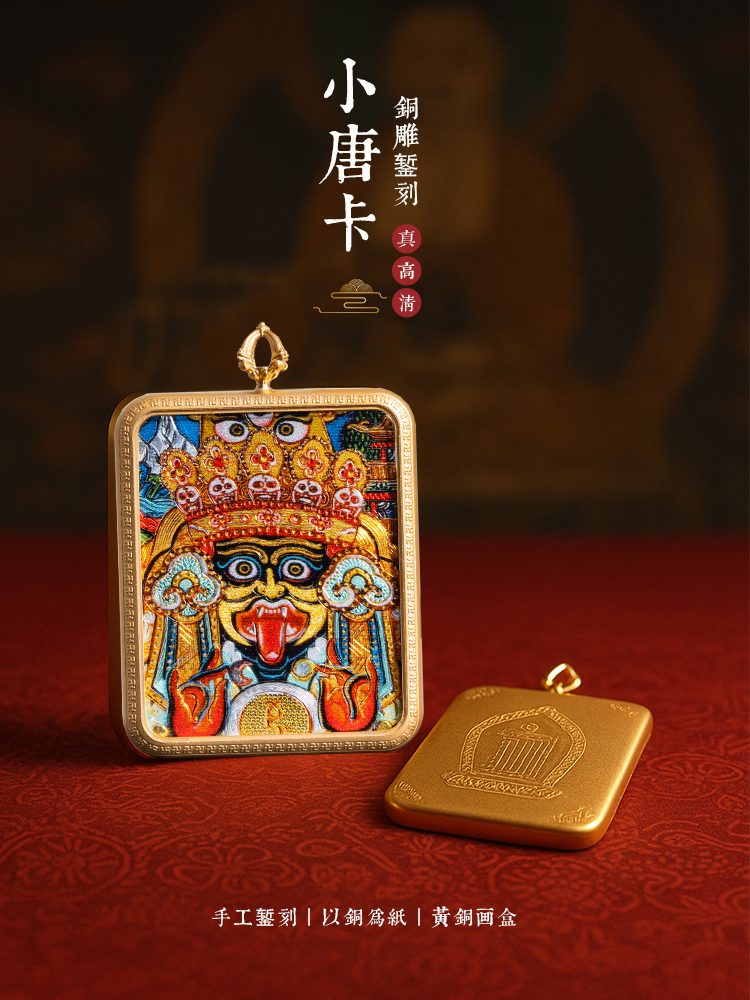
Thangka, mandala and gau box are three of the most frequently used — and most frequently mixed up — terms in Tibetan Buddhist art. They describe genuinely different things, and understanding the distinction actually makes each one more interesting on its own.
Thangka: the painting itself
As covered in full in our thangka painting guide, a thangka is a painted (or sometimes embroidered) image, traditionally on cloth, depicting a specific deity, teacher, or Buddhist scene. Its defining feature is that it is a portrait-like representation — a specific figure, rendered according to strict proportional rules, meant to be a faithful likeness rather than an abstract pattern.
Mandala: a map, not a portrait
A mandala is a different kind of image entirely: a symmetrical, geometric diagram — usually organised around a center point with concentric rings and gates — representing an idealised universe or the residence of a deity, used as a tool for meditation and visualisation rather than as a portrait of a figure. Where a thangka shows you who, a mandala shows you where and how everything is arranged in relation to a sacred center. The two can appear together — a deity's thangka portrait surrounded by a mandala-like structure — but they answer different visual questions.
Sand mandalas: built to be destroyed
One of the most well-known mandala traditions outside specialist circles is the sand mandala, in which monks spend days or weeks placing millions of grains of coloured sand into an elaborate mandala design, grain by grain, using narrow metal funnels. Once complete, the mandala is ritually swept away and the sand is typically released into flowing water — a deliberate, built-in teaching on impermanence, rather than an unfortunate loss of painstaking work. This practice is a useful example of how a mandala's meaning lies in what it represents and the process of making it, not necessarily in the finished object surviving indefinitely, which is a genuinely different logic from a thangka or gau box, both of which are made specifically to last and be kept.
Gau box: the wearable shrine
A gau (or ghau), covered fully in our gau box meaning guide, is neither a painting style nor a diagram — it is a physical object: a small metal shrine-box, traditionally worn on a cord, built to hold a sacred image or relic close to the body. The gau is the container; a thangka is very often the thing placed inside it.
A fourth term worth knowing: tsatsa
One more term worth having in your vocabulary alongside these three: a tsatsa is a small, relief-moulded clay votive image, pressed from a mould and sometimes mixed with sacred materials, traditionally placed in a gau box, a shrine, or a stupa rather than worn as the main image itself. Where a thangka is painted and a mandala is a diagram, a tsatsa is a small sculptural object — a third distinct category of sacred art, and historically one of the more common alternatives to a painted thangka inside an older gau box.
How the four fit together
Put simply: a gau box is the case; a thangka is very often the portrait placed inside that case; a tsatsa is a small moulded alternative sometimes placed inside instead; and a mandala is a separate kind of diagrammatic image that occasionally appears alongside or behind a thangka's central figure, but is not itself what most gau pendants contain. In our own pendants, the front face holds a miniature hand-finished thangka of a specific guardian or protector, while the back is engraved with the Kalachakra seal — a compact symbolic emblem related in spirit to mandala symbolism, covered in our Kalachakra guide, though it is its own specific tradition rather than a full mandala diagram.
Common questions
Can a gau box contain something other than a thangka?
Yes — historically gau boxes have held small clay relic figures (tsatsa), folded scripture pages, or blessed objects, in addition to painted images. A thangka is simply the most common contemporary choice for a wearable pendant.
Is a mandala the same as the circular pattern on some jewelry?
Not necessarily — the word "mandala" is sometimes used loosely in Western design to describe any circular, symmetrical pattern, which is broader than its specific meaning in Buddhist practice as a structured meditation diagram tied to a particular deity or teaching.
Does our pendant contain a mandala?
Our pendants centre on a thangka portrait of a specific guardian or protector, with a Kalachakra seal on the reverse — so while the back carries mandala-adjacent symbolism, the piece is best described as a thangka gau pendant rather than a mandala pendant.